Are Anti-Fog Sprays Worth It or Should I Buy a Demister Pad?
Fogged-up bathroom mirrors are the bane of early mornings and late-night routines everywhere. Whether you’re shaving, applying makeup, or brushing your teeth, a clear mirror is essential. But with steam and humidity, mirror fog quickly becomes a nuisance. This dilemma often leads homeowners and designers to wonder: Are anti-fog sprays worth it, or is a heated demister pad a better investment?
As an architect and bath spec enthusiast with 12 years in residential remodel documentation, I’ve coordinated with electricians and glaziers to harmonize mirror designs with lighting and mounting constraints. In this article, we’ll break down the pros and cons of anti-fog sprays versus demister pads, bring in sizing and lighting rules from trusted guidelines like the National Kitchen & Bath Association (NKBA), and examine how function drives mirror choice beyond aesthetics.
Understanding Mirror Fog: Why It Happens and What to Do
Condensation forms when humid air hits the cool surface of a bathroom mirror. The immediate fix is to defog with a cloth or run hot water to generate steam—but these aren’t permanent solutions. Commercial options boil down to two main categories:
- Anti-fog sprays/ coatings: Temporary chemical treatments applied directly to mirror glass.
- Heated demister pads: Electric pads adhered behind the mirror, warming its surface to prevent condensation.
Both have their own merits, but let’s analyze them in detail.
Anti-Fog Sprays: Quick Fix with Short-Term Benefits
Anti-fog sprays, typically silicone or surfactant-based, reduce surface tension on mirror glass to keep water droplet formation at bay. They’re widely available, inexpensive, and DIY-friendly.
Pros of Anti-Fog Sprays
- Cost-effective: Less upfront investment compared to electrical upgrades.
- Easy application: Apply at any time without professional help.
- No wiring or installation: Perfect for renters or temporary setups.
Cons of Anti-Fog Sprays
- Temporary effect: Needs reapplication every few weeks or after cleaning.
- Uneven performance: Results depend on spray quality and application technique.
- Not integrated: Does nothing to improve overall mirror or room lighting conditions.
Verdict: Anti-fog sprays are a reasonable stopgap, especially if you want a no-hassle, DIY solution. However, for reliable, long-term defogging, they often disappoint.
Demister Pads: The Professional, Long-Term Solution
Heated demister pads are thin, electric mats installed behind the mirror glass to gently warm its surface above the dew point, thus preventing fogging entirely. They are increasingly popular in high-end residential and commercial bathrooms.
Pros of Demister Pads
- Permanent anti-fog solution: Effectively eliminates mirror fog for as long as the heating element works.
- Professional installation: Usually hardwired by an electrician, integrated with mirror lighting and switches.
- Enhanced mirror features: Compatible with modern mirrors—especially those with LED backlighting or front-lit designs from brands like Golden Lighting and Lumens.
Cons of Demister Pads
- Higher upfront cost: Initial investment is larger due to materials and professional labor.
- Installation complexity: Requires precise templating by the glazier, electrical feed installation by an electrician, and coordination on mounting.
- Requires electrical infrastructure: Not ideal for spaces without easy access to power feeds.
Verdict: If you want a no-maintenance, highly functional mirror with long life, heated demister pads are the top choice—especially in remodels where wiring and lighting upgrades are already planned.
Mirror Types and Functional Decisions: More Than Just Anti-Fog
Mirror selection is about much more than fog prevention. The National Kitchen & Bath Association (NKBA) emphasizes mirror shape, storage, mounting, and lighting as crucial to bathroom function. Let’s cover these points briefly to put anti-fog options into context.
Mirror Shape and Sizing Tied to Lighting
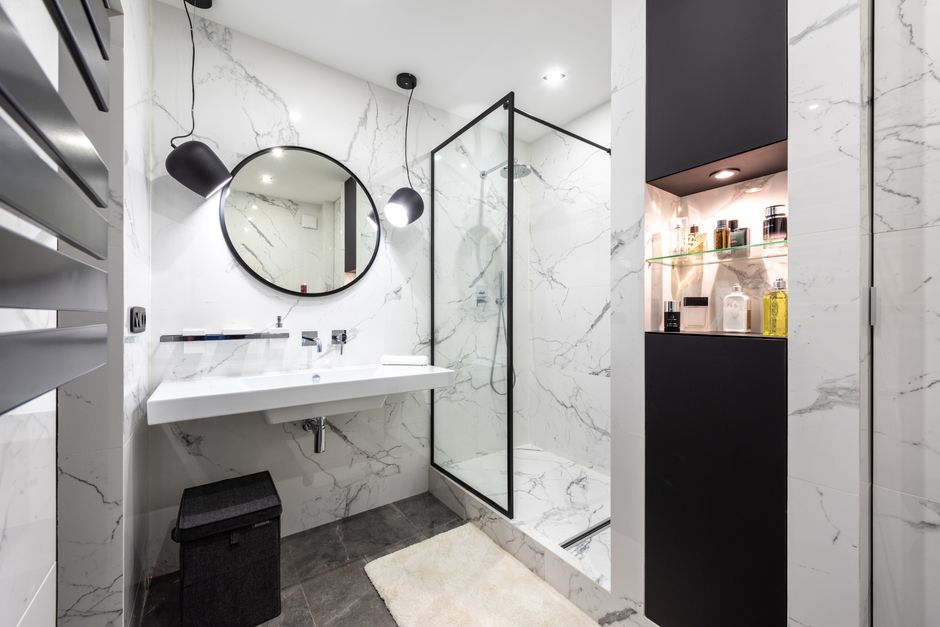
One frequent mistake: sizing vanity mirrors too wide and crowding flanking sconces. NKBA guidelines suggest a mirror width roughly matching the width of the vanity cabinet minus the width of side sconces—about 6-8 inches of space on each side is key for proper sconce placement.
Lighting comes before mirror width in my specs: I always decide fixture size and location first, then size the mirror accordingly. This avoids conflict and ensures effective task lighting.Placement Heights and Sconce Spacing
- Mirror height: Ideally, the bottom edge is about 40 inches from the floor with a top height around 75 inches, balancing the average user’s eye line and space above vanities.
- Sconce spacing: Symmetrical sconces mounted 65-70 inches from the floor and 28-36 inches apart provide shadow-free, flattering light.
Oversized mirrors that run too close to sconces make lighting less effective and visually crowded.
Task Lighting vs Ambient Lighting
Task lighting—essential near mirrors—requires bright, white light with a high Color Rendering Index (CRI 90+) for accurate color perception. Ambient lighting fills the space but doesn’t replace task-focused luminance.
Leading lighting brands like Golden Lighting and retailers such as Lumens feature fixtures designed for these purposes, with precise lumen outputs and optimal Kelvin temperatures.Heated Demister Pad Retrofit: What to Expect
Concerned about installing a heated pad in your existing mirror? A retrofit is possible but requires care.
- Template and measurement: Your glazier will need an exact measurement of your mirror’s plate glass to produce a custom-sized demister pad that fits perfectly behind, avoiding edges that warp or peel.
- Electrical feed: An electrician must run a dedicated, safe power source into the wall cavity behind the vanity mirror. The demister wiring is often hidden behind a switch integrated with your lighting control.
- Mirror frame and sealing: Essential to avoid moisture ingress at unsealed edges—a frequent failure point in humid bathrooms. Cheap frames and peeling seals accelerate fog problems despite heating.
Ill-advised demo or rough retrofits risk damaging mirror glass or creating loose fixes with poor longevity.
Anti Fog Mirror Options Summary
Option Effectiveness Installation Cost Longevity Maintenance Anti-Fog Spray Moderate to Low DIY; simple Low Weeks before reapplication Frequent reapplication Heated Demister Pad High; consistent Professional; electrician & glazier needed Medium to High upfront Years with proper installation Minimal; occasional electrical checksFinal Thoughts
When debating anti fog sprays vs demister, the answer depends on your priorities. If you want a quick, budget-friendly fix, anti-fog sprays suffice. But if you’re investing in a comprehensive bathroom upgrade with coordinated lighting (task and ambient), mirror sizing aligned with sconce spacing, and durable construction, a heated demister pad retrofit is well worth it.
Don’t forget—mirror lighting decisions come first. Selecting fixtures from round mirror 30 inch brands like Golden Lighting or sourcing from Lumens ensures you get crisp, flattering task lighting that works in harmony with your mirror. Nailing height and spacing requirements—following NKBA guidelines—makes the Find more info bathroom both functional and beautiful.
And from experience: Demister yes. Dashboard maybe. That is, I’m always on board with heated mirrors to defeat humidity failures—cheap frames, unsealed edges, and ineffective sprays just don’t cut it long term.
Need help specifying your anti-fog mirror system or planning your bath lighting? Reach out to your local NKBA-certified designer or consult your glazier and electrician early to align your reflective surfaces with your illumination and installation capabilities.